
A journey to discover some of the attractions of the Pistoia Mountains, sitting comfortably in a car so as to be able to enjoy the slow rhythms of these places each with their own strong cultural identity, and that can offer you unexpected surprises. From the Ferriere Suspension Bridge to the Astronomical Observatory of the Pistoia Mountains. Here a group of amateur astronomers of GAMP – Gruppo Astrofili Montagna Pistoiese scans the skies, looking for new asteroids.
Itinerari / In the mountains
And so we went outdoors to see the stars again
A trip to San Marcello Piteglio, from the suspension bridge to the astronomical observatory
San Marcello Piteglio
An itinerary to discover the Pistoia Mountains up to Pian de' Termini, 1.000 metres above sea level.
Tappe itinerario
-
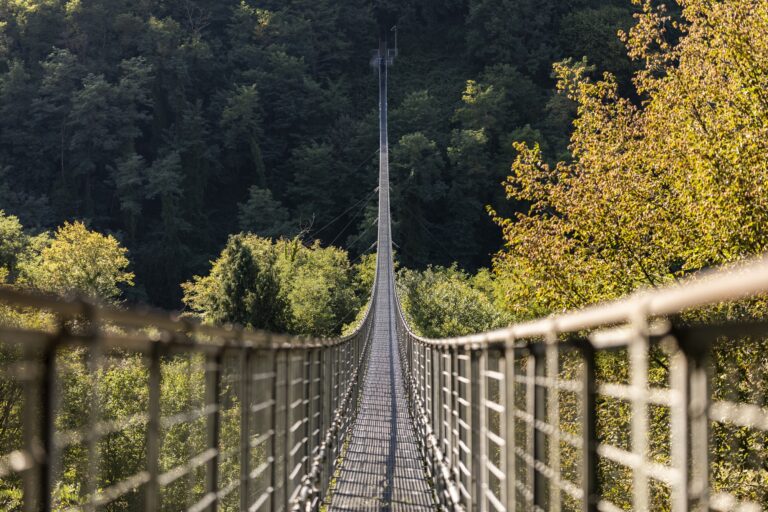
Ferriere Suspension Bridge
San Marcello Piteglio
Tappa 1
Ferriere Suspension Bridge
The Ferriere Suspension Bridge, built in 1923, is made up of a pedestrian gangway with four steel cables, 227 metres long and 36 metres high. This hanging bridge joins the two sides of the Lima River and, in the past, Popiglio’s labourers who worked in the metallurgic factories on the opposite side of the mountains saved themselves the trouble of travelling six kilometres every day by crossing over it. Nowadays you can cross the bridge from one side to the other and can enjoy a truly breathtaking panorama!
-
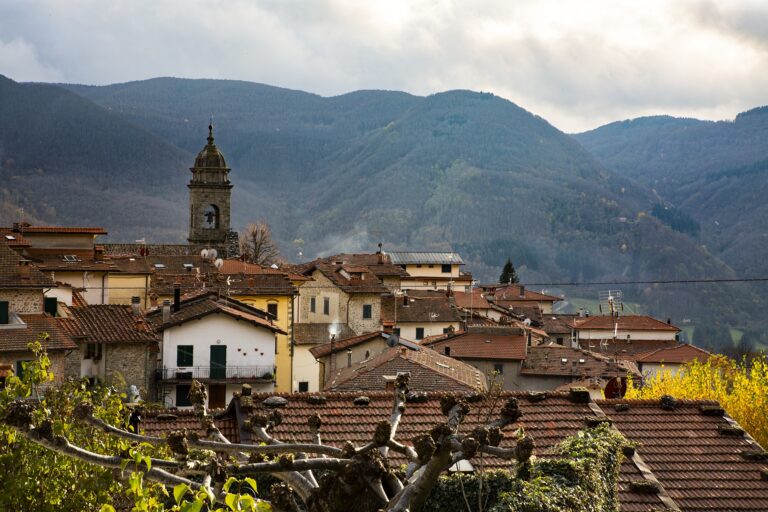
Gavinana
Tappa 2
Gavinana
Gavinana is a delightful medieval hamlet, a district of the town of San Marcello Piteglio. We first arrive in the town square with the equestrian statue of Francesco Ferrucci in its centre, made to commemorate the historical battle of 1530. The wonderful church of Pieve di Santa Maria Assunta, is well worth a visit: it is a 11th-century Romanesque building with an extremely precious organ inside. This historic organ is one of the largest in Italy with its 2.063 pipes! At Gavinana you can also visit the Museo naturalistico archeologico dell’Appennino Pistoiese which reconstructs the history of man in these areas and has, on exhibition, many prehistoric findings of the North-Western Apennines, among which a skeleton of a bear going back to cavemen times.
-
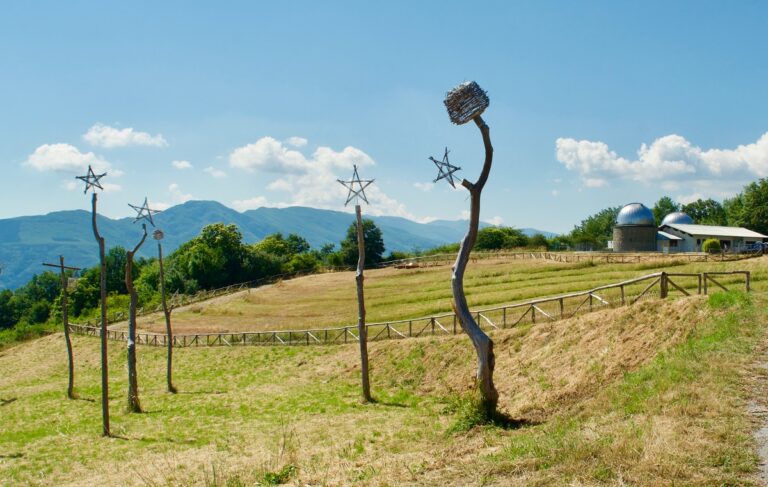
Astronomical Observatory of the Pistoia Mountains
San Marcello Piteglio
Tappa 3
Astronomical Observatory of the Pistoia Mountains
The Astronomical Observatory of the Pistoia Mountains was built in 1991 and it is looked after by a group of amateur astronomers, from here we can scrutinize the stars thanks to two 5-metre-wide domes, which rotate at 360°, and to two 40 and 60 centimetres wide telescopes. Due to its highly advanced, technological instruments, the Observatory has been able to discover many new asteroids and meteors p
Altri Itinerari: San Marcello Piteglio
-
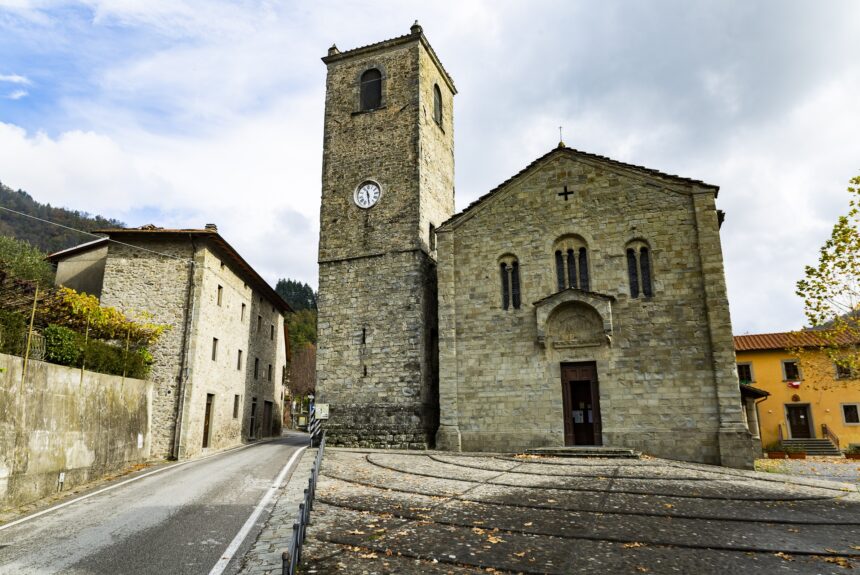
At the Borders of the Grand Duchy: A Journey Through History and Nature
Abetone Cutigliano, San Marcello Piteglio -
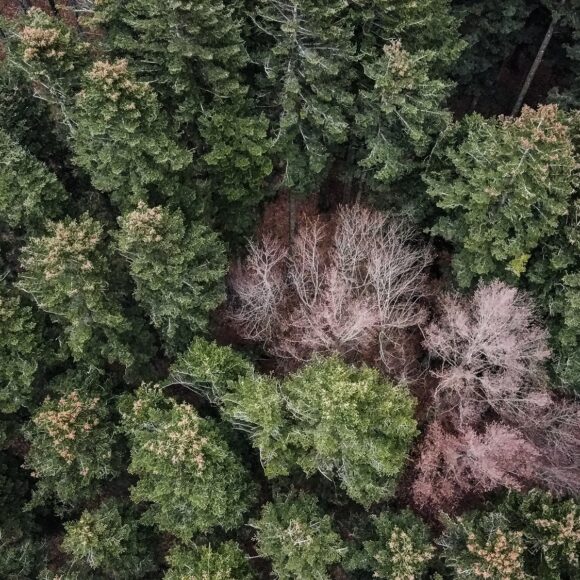
San Marcello Pistoiese and the enchanted Forest
San Marcello Piteglio -

Sacred Art trail- Ecomuseo della Montagna Pistoiese
San Marcello Piteglio -
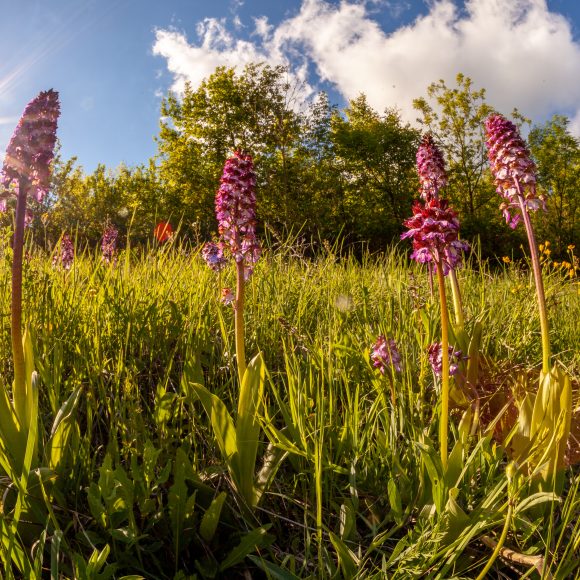
Nature trail – Ecomuseo della Montagna Pistoiese
Abetone Cutigliano, San Marcello Piteglio -
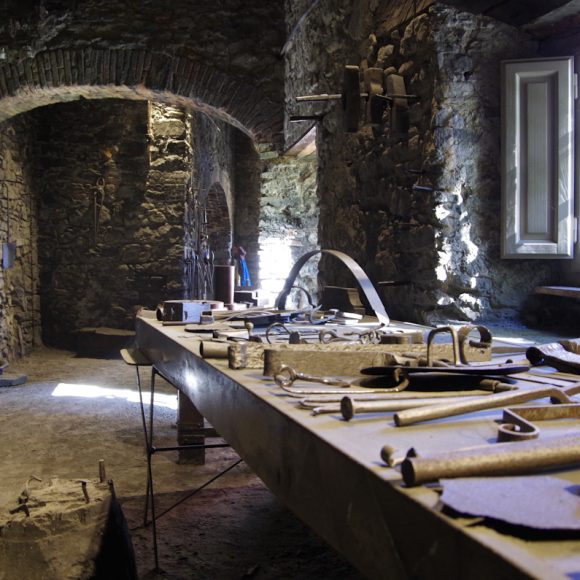
Iron trail – Ecomuseo della Montagna Pistoiese
Pistoia, San Marcello Piteglio -
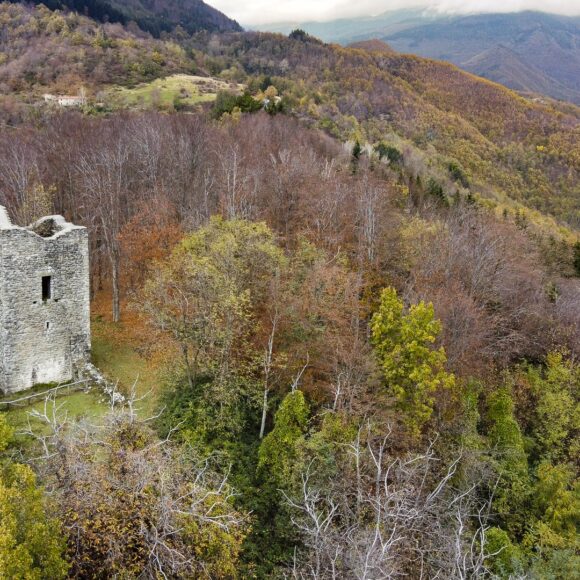
On the Cammino di San Bartolomeo from Pieve di Controne to Popiglio
San Marcello Piteglio
Live the recommended experiences: San Marcello Piteglio
-
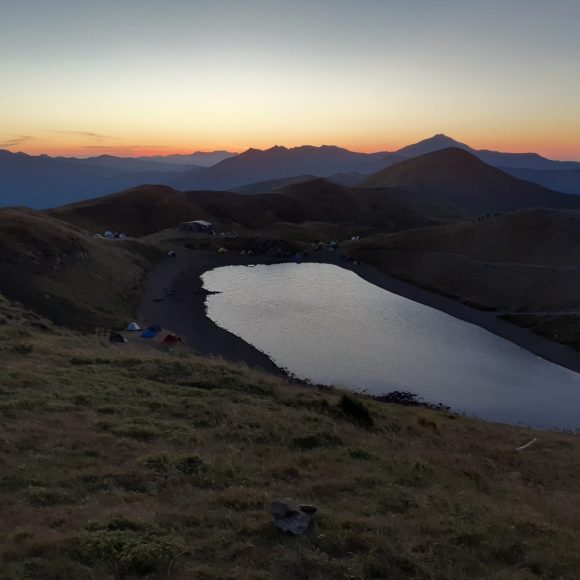
Treks and experiences along the Pistoia Mountains
With the guides of 4Passi.one discover the nature and the history of Pistoia and its mountains. Find out more beautiful experiences tailor-made for you.
On request
Abetone Cutigliano, San Marcello Piteglio -

Hike and yoga in the Teso Forest
Together with Tuscany Experience, a loop hike through the enchanting setting of the Teso Forest, enriched by a regenerating yoga practice in the woods.
Saturday, July 19, 2025
San Marcello Piteglio -
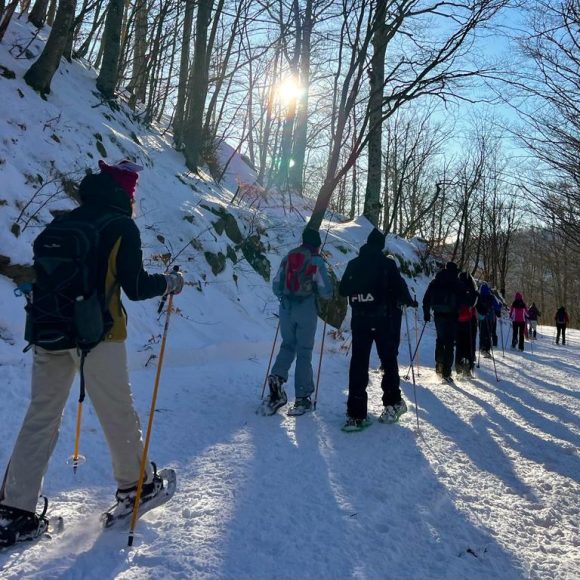
Exploring the Teso Forest on snowshoes
Castanea APS celebrates the arrival of the first snow in the Pistoia Mountains with a snowshoeing adventure through the snowy woods of the Teso forest.
Saturday, December 14, and Sunday, December 15, 2024
San Marcello Piteglio -
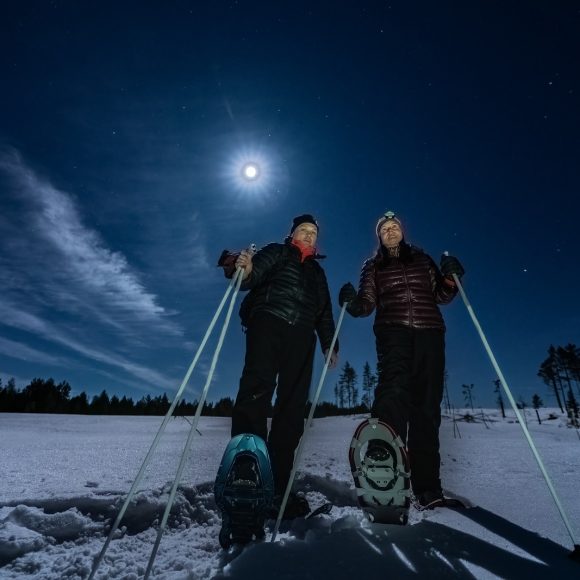
Snowshoeing with a nighttime return
Join Castanea APS for a snowshoeing adventure with a nighttime return in the Forest del Teso. An unforgettable experience in the Pistoia Mountains.
Sunday, December 29, 2024
San Marcello Piteglio -
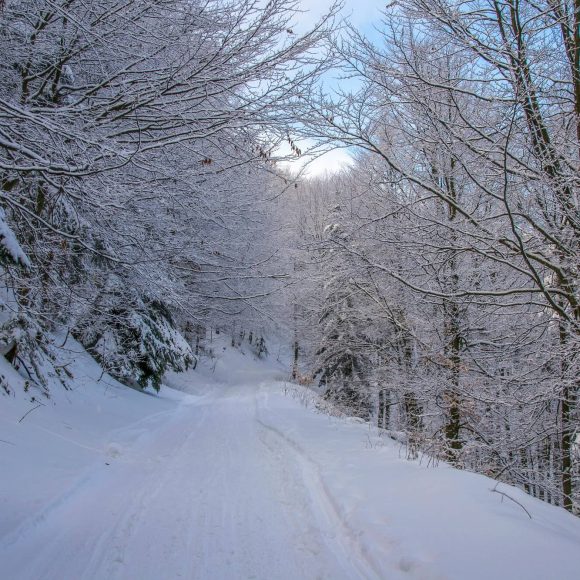
Snowshoeing to the Montanaro Refuge
Loop snowshoe hike in the Forest of Teso, through snowy woods and breathtaking views. Explore the Pistoiese Mountains with Castanea APS.
Sunday, December 22, 2024
San Marcello Piteglio -
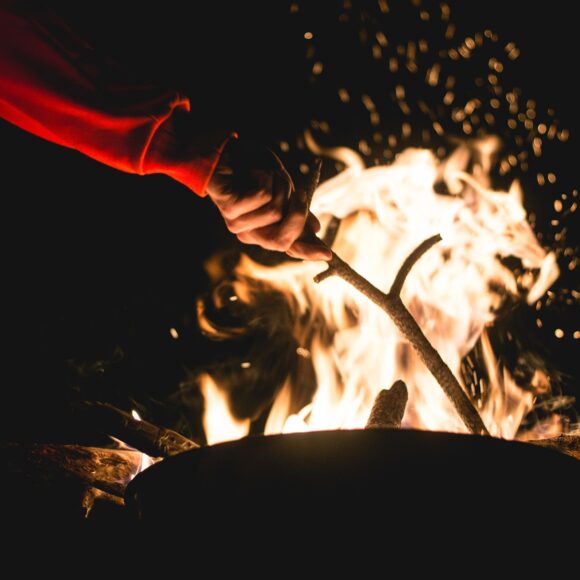
Full moon night in Le Roncole
Rediscover the value of simple things, through this intimate and charming excursion.
Saturday 24th July, h 18
San Marcello Piteglio -
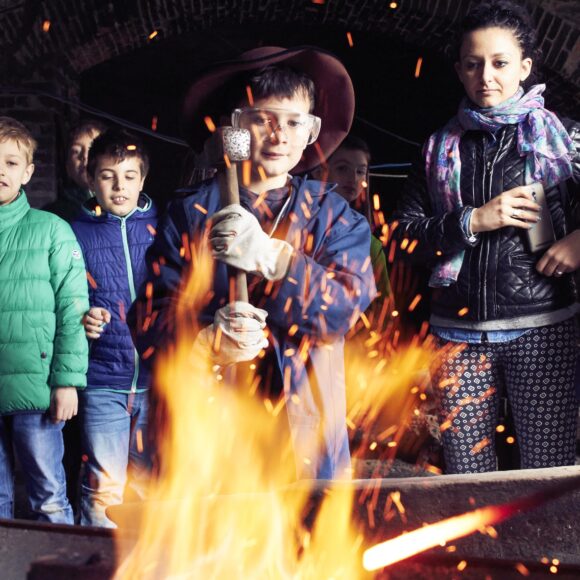
Water, fire, iron and… “hobnailed goats”
Have you ever drunk mountain water? Or fed goats with dried bread? Have you ever made a small iron object, as real blacksmiths do? If your reply is no, then this is the perfect proposal for you!
27 Giugno 2021
Events
-
16
The Clothing of Saint James
16 July 2026
PistoiaPiazza del Duomo
-
23

Porretta Soul Festival 2026
23 July 2026 / 26 July 2026
Porretta TermeRufus Thomas Park
-
25
Joust of the Bear
25 July 2026
PistoiaPiazza del Duomo
-
31

Serravalle Rock
31 July 2026 / 02 August 2026
Serravalle PistoieseRocca Castruccio Castracani
-
5

Abestone – Hard Enduro
05 September 2026 / 06 September 2026
Abetone CutiglianoAbetone